
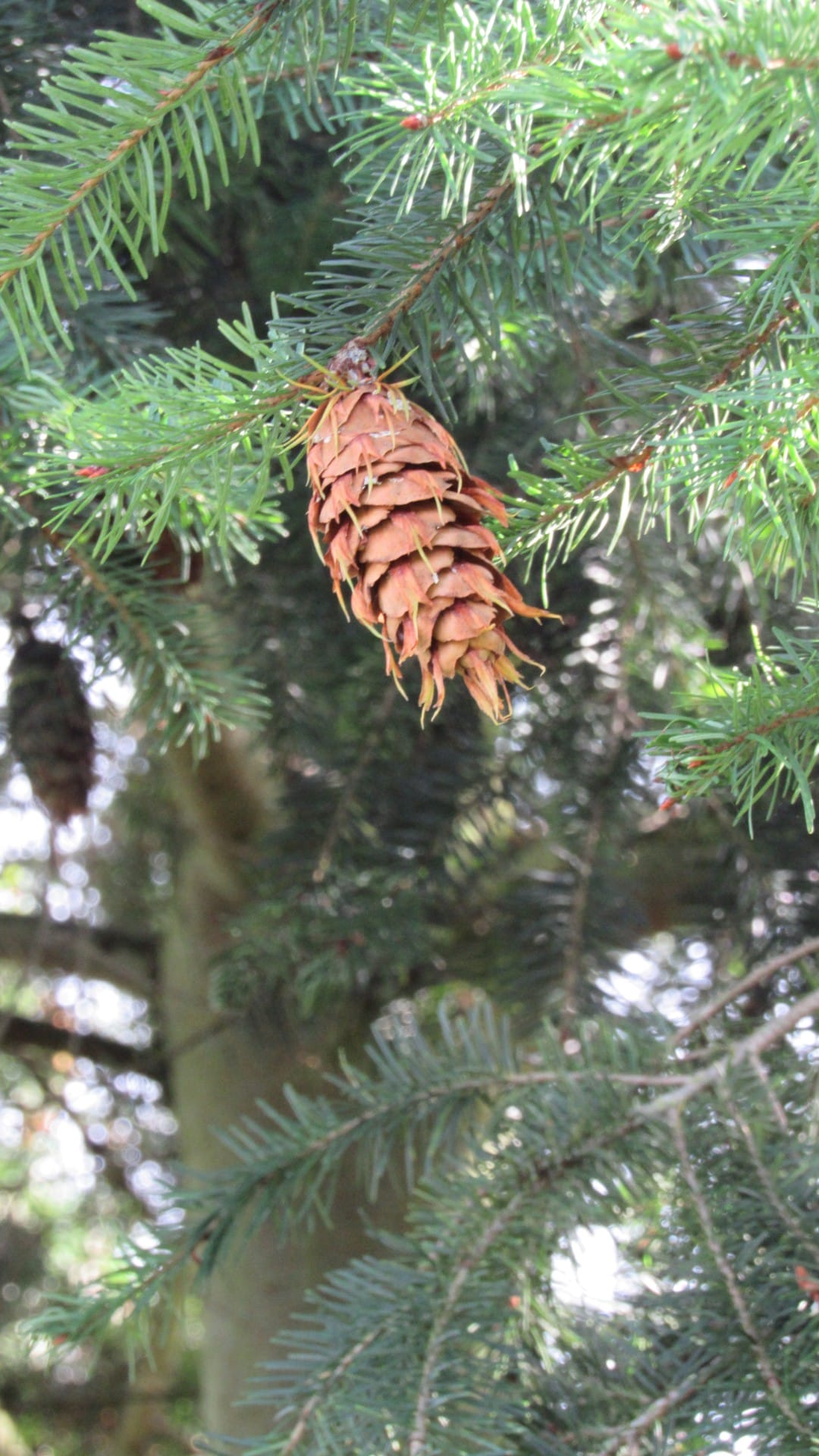
Douglas Fir
Pseudotsuga menziesii
The Douglas Fir produces small cone-like structures called strobiles or cones as its fruit.
About
Douglas Fir
The Appearance
A large evergreen conifer with a tall, straight trunk and a broad, conical crown. It has soft, dark green needles and produces large, pendulous cones.
The Produce
The Douglas Fir produces small cone-like structures called strobiles or cones as its fruit. These cones are cylindrical and hang downward, measuring about 3 to 4 inches in length.
The Flowers
Produces small, yellowish flowers in spring, followed by large, pendulous cones.
The Leaves
These leaves are generally about 1 to 1.5 inches long, radiating a vibrant green colour.
The Habitat
Prefers well-drained soils and full sun. Commonly found in forests and mountainous regions.
The Ecology
Provides habitat and food for various wildlife, including birds and mammals. The dense foliage offers excellent cover.
The Culture
Valued for its timber, which is used in construction, paper production, and furniture making. Often planted for reforestation.
Fun Facts
The Douglas Fir is one of the most important timber trees in the world, known for its strong and durable wood.

Explore Deeper With The Interactive Map
Unleash your inner explorer with our interactive map of the Arboretum. This live map labels the location of every tree in the arboretum, providing detailed information on each one.
Dive into the fascinating stories behind each tree, learn about their origins, characteristics, and unique attributes. The interactive map is your perfect companion for an engaging and educational adventure. Discover the rich tapestry of nature with just a few clicks!
Arboretum Index
Stay at East Yorkshire’s most peaceful holiday park